

Columbus Crew - Inter Miami - live odds and in-play markets
What Columbus Crew - Inter Miami is and where it runs
When two strong opponents are about to meet, enthusiasm spreads quickly and the countdown itself becomes part of the fun. This page follows Columbus Crew - Inter Miami from the first whistle to the last, and the board refreshes on its own while the ball is in play. The fixture belongs to USA. MLS, so the stage of that competition applies to this game too.
Entries are declared inside official windows; once the deadline passes the list freezes, and the field stays as it is until the next window. The level of a competition decides how deep the in-play list runs. The venue chosen for the decisive stage teaches as much as the rulebook: a final given the main venue and a prime slot carries a standing that one pushed to a secondary site does not. A meeting of Columbus Crew and Inter Miami in a lower division opens fewer markets than a top-flight fixture, and the board shows only what is genuinely trading at that minute.
Head-to-head history sits beside the live board for a reason. Every rivalry develops its own habits, and the duels already played between these two say a lot, so a quick look before the start is time well spent. Earlier meetings of Columbus Crew and Inter Miami describe habits rather than outcomes, while the standings and the rest of the calendar stay on USA. MLS for anyone checking what this result changes.
Reading the board while the game runs
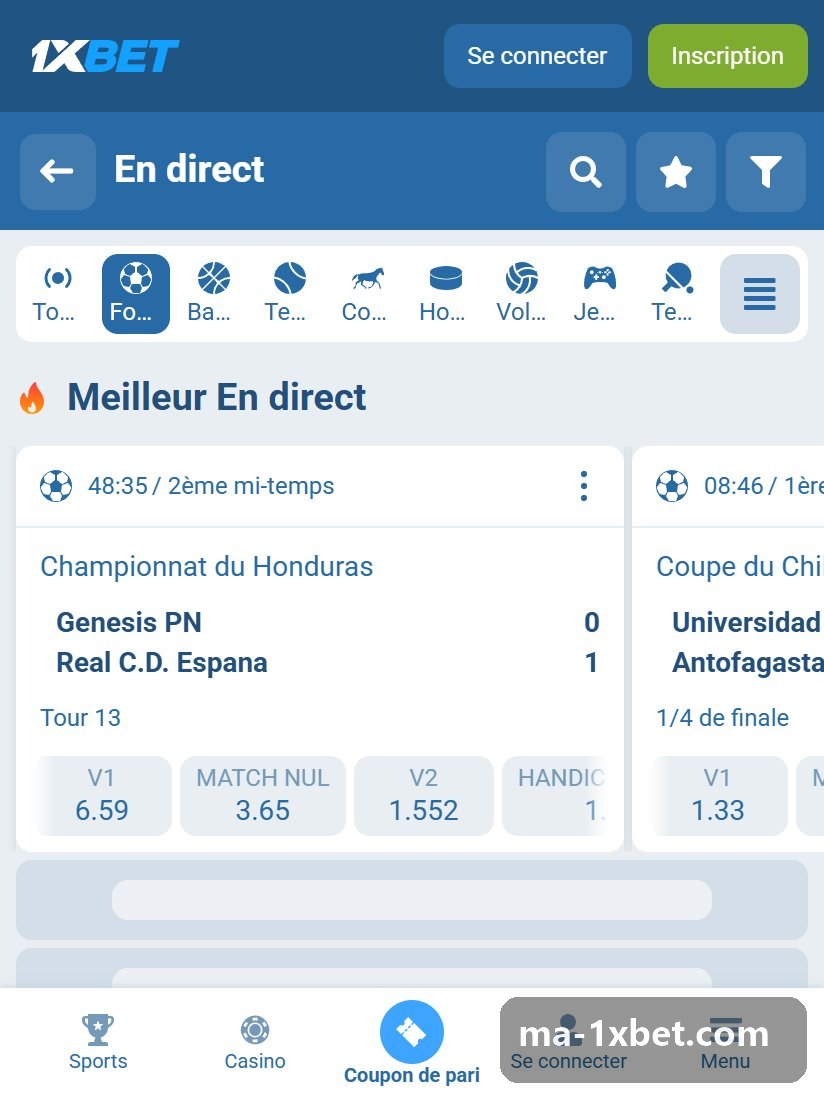

Under the scoreline sit the minute, the pressure counters and the price column. In an accumulator built live, every leg is taken at the price of its own moment, so the final coupon adds up situations that never existed at the same time. A goal, a dismissal or a penalty award rewrites that column at once, so the number seen a second earlier is not the number the coupon accepts.
In front of a home crowd, noise and support inflate the impression of superiority, and the gap felt from the stands is almost always wider than the gap on the field. Reading a football match means watching where the ball spends its minutes, not only what the scoreline says. The opening minutes after the break reveal what was said in the dressing room, and a side that comes back transformed shifts prices before it has even hit the target. Such turns arrive without warning, and the market answers before the crowd does.
Suspension appears while an episode is still unresolved, and the site would rather close for a moment than keep selling a price that reality has already overtaken. At the interval the list shrinks to the markets that survive a break and reopens when play restarts; a long stoppage for treatment or a video review does the same.
Live markets on this fixture
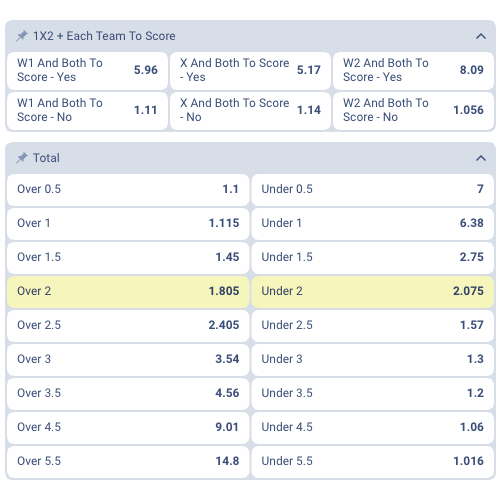
Knowing what is available is the first step toward a more thoughtful bet. The in-play list for football is built in layers: the result, then goals, then the small events that repeat dozens of times in a game. A full day of competition can be covered from this base alone, without opening the detailed sheet, which makes it the quickest format to scan when fixtures come one after another. Those base lines stay open almost from kick-off to the final whistle.
A sheet running to hundreds of lines arrives sorted into families, from outcome to totals to segments, and that grouping turns an unreadable mass into a browsable book. Depth follows coverage, so a widely tracked fixture opens corner and card lines that a quieter one never shows. Between singles and accumulators sit system bets, which arrange several selections into sets of combinations so that one miss does not sink the whole ticket. The ceiling on winnings drops in exchange for that tolerance. The table below shows what each family settles on.
Market | What the bet covers | How it behaves in play |
|---|---|---|
1X2 live | A win for Columbus Crew, a draw, or a win for Inter Miami from the current score | Reprices after every goal and every red card |
Total goals | Goals from both sides together, over or under the posted line | The line drops as the minutes run out |
Asian handicap | One side starts the coupon with a goal advantage | Moves as soon as the game turns one-sided |
Both teams to score | Whether Columbus Crew and Inter Miami both find the net | Closes once the answer can no longer change |
Next goal | Which side scores next, or nobody does | Settles at the next goal or at the whistle |
Corners and cards | The count of corners or cards in a half or across the game | Runs while play continues, pauses at the break |
Correct score | The exact scoreline at the end of the match | Swings hardest in the seconds after a goal |
In fixtures with outsized stakes the logic of the table weakens, and markets built on it, the outcome first among them, give way to lines less tied to hierarchy. A market taken because it matches what is happening on the pitch lasts longer than one taken out of habit, and the lines above are read against the clock.
What moves the price right now
One heated tackle and the referee already reaches for his cards; in a tense match the bookings pile up faster than anyone expects, which is exactly why the total cards market gets interesting long before the first goal. Each of those turns reaches the coupon within seconds. Scored in the opening minutes, a goal leaves the whole match for a response; the same goal near the finish leaves nothing but long balls and hope. One goal shifts the totals line, the handicap and the result price in the same refresh.
A sending-off in the first leg is paid for in the second: the suspended player misses the return, and the tie tilts before that game even starts. A red card leaves a side a player short for the rest of the game, and the market treats the remaining minutes as a different match. At the interval a separate set of second-half lines opens and starts again from nil-nil, where the first act's score no longer counts and only what remains to be played is priced. The two halves seldom carry the same rhythm, and the second is where the goal lines usually get decided.
Knowing who owns penalty duty matters for scorer bets, since the designated taker collects goals every season without needing to create a single chance himself. Corners and free kicks near the area are the shortest route to a goal when a side cannot build through the middle. Benches are not equal: some send on players who would start elsewhere, others lose quality with the very first change, and the last half hour tells that story. Fresh legs after the hour change the pressing distance, and the goal markets answer within a few minutes.
Match statistics: what they show and what they hide
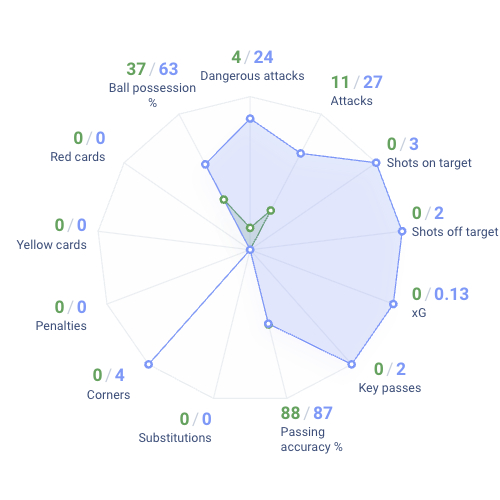
Separate shots attempted from shots on target, because a flurry of efforts from distance inflates the count while leaving the goalkeeper completely untroubled. Possession, shots, shots on target, corners and dangerous attacks describe pressure, and pressure is what the goal markets price. Possession share says nothing about direction of play; some teams hold the ball without going anywhere, others hand it over on purpose to strike on the counter. A side can hold the ball for an hour without troubling the keeper, and the counter still reads in its favour.
Corner marking is drilled around specific profiles. The tall defender assigned to the opponent's best header has no natural understudy, and losing him breaks the scheme far beyond one name on the sheet. One goalkeeper in form wipes out the gap the shot count promised. Some competitors thrive against an opponent who takes the initiative and get lost against a passive profile; the style opposite often explains a run better than the quality opposite does. Recent form of Columbus Crew and Inter Miami explains the opening prices, then loses weight with every minute the fixture actually plays.
Placing a bet while the game is live
The line opens several days before the event. The route is identical on a computer and on a phone.
Start times appear in the time zone set on your profile, and one look at that setting keeps you from aiming at a meeting that begins at another hour in Morocco. The football list in live football holds the fixture in place from kick-off to the final whistle.
Tap the price of the market you want. The stake box behaves differently by type: an accumulator takes one stake covering the whole chain, while a system spreads that same amount across every combination it builds. The coupon stores that figure as it stood at the tap.
Enter the stake in dirhams and check the return the coupon calculates.
Prices can move while the slip sits open; depending on the setting chosen, validation goes through at the new figure or stops to ask again, and that preference is picked beforehand, not afterwards. A price that moved while you were typing comes back for acceptance instead of being swapped in silently.
Follow the ticket in the list of open bets, where settlement appears once the result is official.
Where the option is offered, a running bet can be closed early for the sum shown at that moment, a judgement about the minutes still to come rather than the final score.
Prematch and live on the same fixture
One stake placed before the start is a single amount weighed once, in dirhams; live, decisions arrive one after another and the total committed gets harder to track. The prematch line opens days ahead on the football line and closes the moment the referee starts play. Picking fixtures you can genuinely follow from Morocco is decided ahead of time, because the schedule is known and a late slot is worth less to you than an early evening one. A price taken early carries the risk of team news; one taken in play carries the risk of the next attack.
The timing is entirely up to you. A position opened before kick-off and an addition made twenty minutes in can sit in the same ticket list. Live betting keeps pace with the match, so next-goal prices move the moment a side starts pushing forward. The board stays open to the last action, and the rest of the live section works on the same clock for every other sport in play.
Money, app and help in Morocco
While a mid-match deposit goes through, the price you had spotted keeps moving; funding the account before the game keeps the chosen odds within reach. An account held in Morocco is funded and settled in dirhams, so no conversion stands between the deposit and the stake. Money from an unsettled slip only reaches the balance once the market is graded, so a withdrawal request can only point at funds already credited. A withdrawal is requested from the same cashier screen, which lists the methods open for it at that moment.
Method | What it is | Currency | Suits a bettor who |
|---|---|---|---|
CIH | Moroccan bank, cards and transfers | MAD | already banks there and pays from the banking app |
Attijari | Moroccan banking network with branches nationwide | MAD | holds a card from the same group |
Al Barid | Postal banking service | MAD | uses the post office network every day |
Lbankalik | Everyday Moroccan banking service | MAD | handles the account mostly from a phone |
Cash Plus | Cash payment network with staffed counters | MAD | pays in notes at a counter, without a card |
Layout is built for a small screen, so lists of competitions and fixtures read cleanly without pinching, zooming or sliding sideways on every line. A phone left on the fixture screen shows the same prices as a computer, and the mobile app page sets out what the download asks for. A notification lands the moment the price on your selection shifts. A goal alert lands faster than a manual refresh, which decides whether a market is still open when you reach it.
Past conversations are kept, so picking an older thread back up does not mean retelling the entire affair from its very beginning. A stake that did not go through is easiest to raise from inside the account, where the ticket carries its own number. A page that will not load in the app is usually sorted out once the adviser has the app version and the exact time of the failure. The reply arrives in the same window, and the thread keeps the history.
After the final whistle
The list of pending bets doubles as a diary: every open selection carries the date and time of its meeting, and the schedule that concerns you writes itself. Settlement runs against the official result, and the ticket moves from the open list into the history. Nothing has to be confirmed during the visit; going through the section just to see how it is arranged counts as a use of its own. The competition carries on, and the next round for Columbus Crew and Inter Miami appears on the same list within hours.
The moment has finally arrived. A game still in play keeps its board alive to the last kick, and the list rolls on to the next kick-off as soon as this one closes.