

Saham - Oman Club - live odds and in-play markets
What Saham - Oman Club is and where it runs
A big sporting event has a rare way of bringing fans together around the same passion. This page follows Saham - Oman Club from the first whistle to the last, and the board refreshes on its own while the ball is in play. The fixture belongs to Oman Professional League, so the stage of that competition applies to this game too.
Entries are declared inside official windows; once the deadline passes the list freezes, and the field stays as it is until the next window. The level of a competition decides how deep the in-play list runs. Depth shows in how many can realistically win: when only a handful of entrants have a case, the average level stays low even if the very top is brilliant. A meeting of Saham and Oman Club in a lower division opens fewer markets than a top-flight fixture, and the board shows only what is genuinely trading at that minute.
Head-to-head history sits beside the live board for a reason. During a live match, measuring the current tempo against earlier meetings helps time an entry on the coupon. Earlier meetings of Saham and Oman Club describe habits rather than outcomes, while the standings and the rest of the calendar stay on Oman Professional League for anyone checking what this result changes.
Reading the board while the game runs
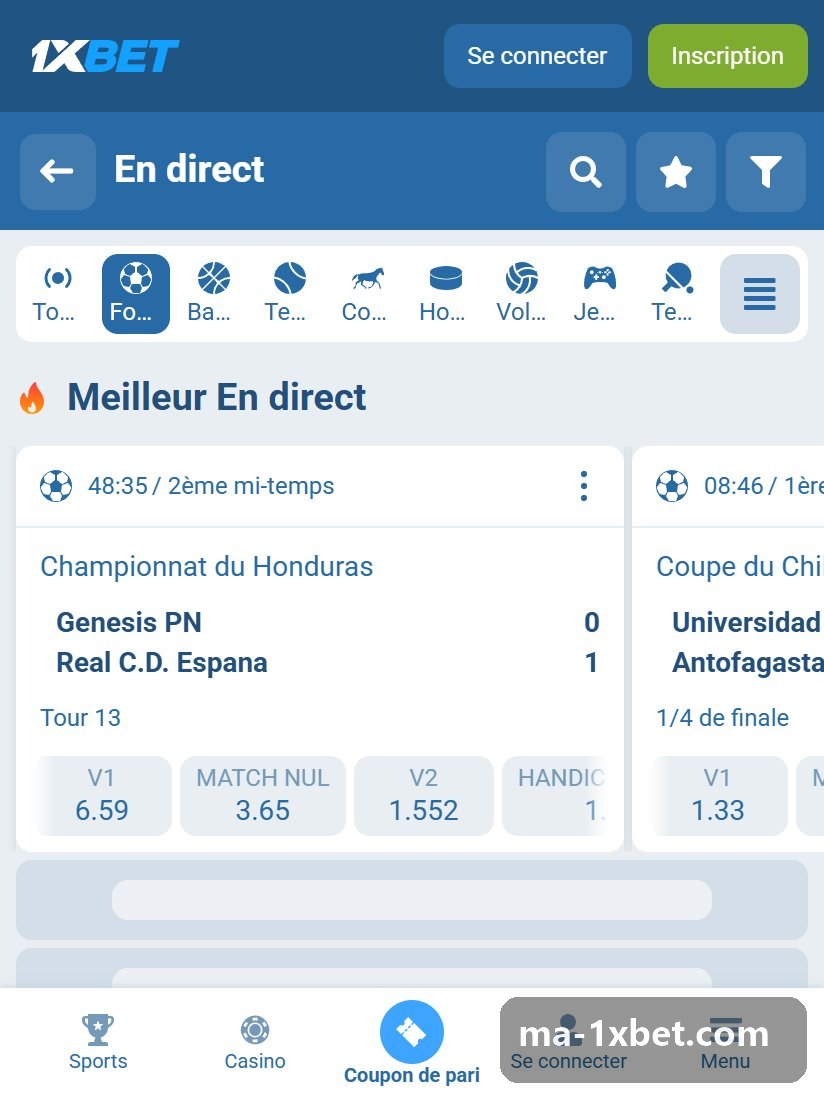

Under the scoreline sit the minute, the pressure counters and the price column. The break between periods carries the sharpest single correction of the evening, since the reassessment is made with the whole first stretch in view. A goal, a dismissal or a penalty award rewrites that column at once, so the number seen a second earlier is not the number the coupon accepts.
Watch who sets the tempo. The side that decides when the meeting speeds up and when it slows holds an edge that rarely reaches the figures column. Reading a football match means watching where the ball spends its minutes, not only what the scoreline says. A long stoppage for treatment works like a small interval, with bodies cooling and momentum draining on both sides, and the restart sometimes hands the ascendancy to the other team. Such turns arrive without warning, and the market answers before the crowd does.
One closed market points to something happening in the game; the whole meeting vanishing from the screen usually signals a data interruption, and it returns once the feed is restored. At the interval the list shrinks to the markets that survive a break and reopens when play restarts; a long stoppage for treatment or a video review does the same.
Live markets on this fixture
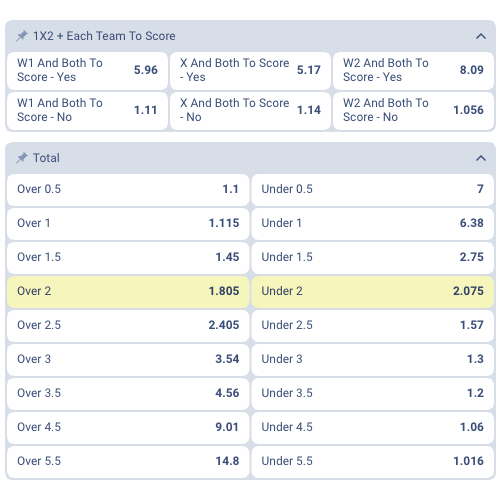
Marquee fixtures open hundreds of lines while smaller games keep to the core selections. The in-play list for football is built in layers: the result, then goals, then the small events that repeat dozens of times in a game. Base positions are the building blocks of accumulators, combining across fixtures of the same tournament into one slip whose price multiplies. Those base lines stay open almost from kick-off to the final whistle.
Most of the volume comes from cutting the same question into finer slices: by segment of the meeting, by participant, by combination of conditions, while the original question stays single. Depth follows coverage, so a widely tracked fixture opens corner and card lines that a quieter one never shows. Some markets only come to life after the start, such as the next score, the outcome of the remaining play, or the first side to reach a set number. Live play adds lines that the pre-match board simply does not carry. The table below shows what each family settles on.
Market | What the bet covers | How it behaves in play |
|---|---|---|
1X2 live | A win for Saham, a draw, or a win for Oman Club from the current score | Reprices after every goal and every red card |
Total goals | Goals from both sides together, over or under the posted line | The line drops as the minutes run out |
Asian handicap | One side starts the coupon with a goal advantage | Moves as soon as the game turns one-sided |
Both teams to score | Whether Saham and Oman Club both find the net | Closes once the answer can no longer change |
Next goal | Which side scores next, or nobody does | Settles at the next goal or at the whistle |
Corners and cards | The count of corners or cards in a half or across the game | Runs while play continues, pauses at the break |
Correct score | The exact scoreline at the end of the match | Swings hardest in the seconds after a goal |
Knowing nothing about one of the two participants turns any detailed position into decoration; a wide line does the job better, and skipping the fixture altogether does it best. A market taken because it matches what is happening on the pitch lasts longer than one taken out of habit, and the lines above are read against the clock.
What moves the price right now
The scoreboard reads the same after a saved penalty, yet everything else shifts: the keeper who pushes it away lifts his team, the player who missed starts passing sideways, and the next goal often changes ends. Each of those turns reaches the coupon within seconds. The second goal changes what the match is, since a two-goal lead turns the leader into a manager of the game, and comebacks from that far back stay rare. One goal shifts the totals line, the handicap and the result price in the same refresh.
A player already booked no longer defends the same way: the tackle comes later, some duels go unchallenged, and the coach often withdraws him at the break before a second card arrives. A red card leaves a side a player short for the rest of the game, and the market treats the remaining minutes as a different match. The second period frequently starts with a different shape from the one that finished the first, a defender fewer, a wide man more, and the balance of the game redrawn. The two halves seldom carry the same rhythm, and the second is where the goal lines usually get decided.
A central free kick near the box sets up a direct strike at goal, while a wide one gets treated like an advanced corner, delivered for the heads waiting inside. Corners and free kicks near the area are the shortest route to a goal when a side cannot build through the middle. A player sent on for the closing minutes can finish the night on the scoresheet, which is why the scorer market keeps a price on names that never start. Fresh legs after the hour change the pressing distance, and the goal markets answer within a few minutes.
Match statistics: what they show and what they hide
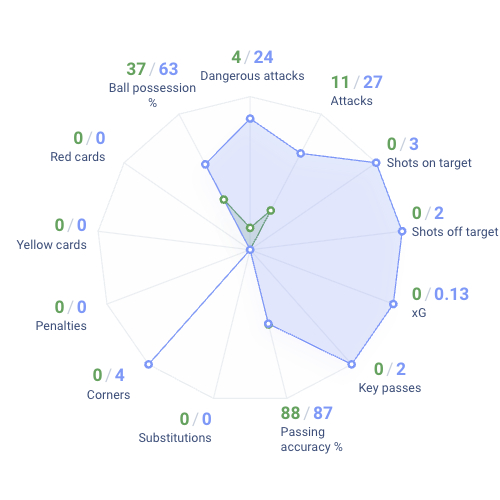
A team's averages were collected with a given squad on the pitch. A first-choice goalkeeper out, or a holding midfielder suspended, changes the very thing those numbers describe. Possession, shots, shots on target, corners and dangerous attacks describe pressure, and pressure is what the goal markets price. Corner counts reward sides that cross often and sides chasing a scoreline late on, so the figure measures a style and a situation rather than dominance. A side can hold the ball for an hour without troubling the keeper, and the counter still reads in its favour.
Build-up shifts as well: a goalkeeper comfortable with his feet keeps short passing alive under pressure, while another clears long and hands possession back to the opposition more often than to his own midfielders. One goalkeeper in form wipes out the gap the shot count promised. Head-to-head history works as a signal of its own, with some competitors stumbling against the same opponent time after time whatever their current momentum. Recent form of Saham and Oman Club explains the opening prices, then loses weight with every minute the fixture actually plays.
Placing a bet while the game is live
No special expertise is needed to take your first steps. The route is identical on a computer and on a phone.
On the competition page, fixtures come grouped by round, so a whole round can be scanned in one look before deciding where to stop. The football list in live football holds the fixture in place from kick-off to the final whistle.
Tap the price of the market you want. With a system you decide how many picks must land together inside each combination, and the longer your starting list, the more combinations the slip builds from it. The coupon stores that figure as it stood at the tap.
Enter the stake in dirhams and check the return the coupon calculates.
A meeting that gets under way while you are still filling the slip takes its pre-match line with it, so the pick has to be made again from the live section. A price that moved while you were typing comes back for acceptance instead of being swapped in silently.
Follow the ticket in the list of open bets, where settlement appears once the result is official.
Where the option is offered, a running bet can be closed early for the sum shown at that moment, a judgement about the minutes still to come rather than the final score.
Prematch and live on the same fixture
Choosing your own moment stays possible while nothing has started: you come in when the price suits you. Live, the flow of the meeting sets the tempo instead. The prematch line opens days ahead on the football line and closes the moment the referee starts play. Forming your own estimate before opening the odds page reverses the usual order, and the gap between your figure and the posted price becomes the information that matters. A price taken early carries the risk of team news; one taken in play carries the risk of the next attack.
In play the total is re-priced on the time that remains, not on the whole game. A position opened before kick-off and an addition made twenty minutes in can sit in the same ticket list. On nights when fixtures run in parallel, live picks from different grounds can be gathered into one accumulator, and the whole evening turns into a single ticket to follow. The board stays open to the last action, and the rest of the live section works on the same clock for every other sport in play.
Money, app and help in Morocco
Setting the amount for the whole competition before the first top-up keeps deposits within a budget decided coolly rather than by the mood of the day. An account held in Morocco is funded and settled in dirhams, so no conversion stands between the deposit and the stake. Looking over the withdrawal options before the competition begins, rather than after its last round, leaves time to fill in any missing profile detail. A withdrawal is requested from the same cashier screen, which lists the methods open for it at that moment.
Method | What it is | Currency | Suits a bettor who |
|---|---|---|---|
CIH | Moroccan bank, cards and transfers | MAD | already banks there and pays from the banking app |
Attijari | Moroccan banking network with branches nationwide | MAD | holds a card from the same group |
Al Barid | Postal banking service | MAD | uses the post office network every day |
Lbankalik | Everyday Moroccan banking service | MAD | handles the account mostly from a phone |
Cash Plus | Cash payment network with staffed counters | MAD | pays in notes at a counter, without a card |
Live events open in the same window as the bet slip, removing the back-and-forth between the score and the stake. A phone left on the fixture screen shows the same prices as a computer, and the mobile app page sets out what the download asks for. Settled coupons stay in the history with the odds you took on each pick. A goal alert lands faster than a manual refresh, which decides whether a market is still open when you reach it.
Sending the same question through two channels opens two parallel files that get in each other's way; one thread, nudged when needed, moves in a straighter line. A stake that did not go through is easiest to raise from inside the account, where the ticket carries its own number. A cash deposit made through Cash Plus is traced by its transaction number, so a kept receipt gives the adviser precisely what he looks for. The reply arrives in the same window, and the thread keeps the history.
After the final whistle
Following a tournament also means watching the price move: the same outcome is not valued alike when the line opens and just before the meeting starts. Settlement runs against the official result, and the ticket moves from the open list into the history. Starting with the one meeting that genuinely appeals is the simplest way in, and the rest of the competition opens up afterwards, step by step. The competition carries on, and the next round for Saham and Oman Club appears on the same list within hours.
Adding a market to the slip takes seconds, from the match winner to the totals. A game still in play keeps its board alive to the last kick, and the list rolls on to the next kick-off as soon as this one closes.