
Australian Championship. Statistics play-off round - odds and betting markets
⚽ What Australian Championship. Statistics play-off round is and what its season decides
Australian Championship. Statistics play-off round is a football competition with its own entry rules, its own calendar and its own way of producing a winner. Every result is ratified by the organiser before it enters the table, and that official validation is the single reference used to settle bets. Reading a price starts with knowing whether the trophy is settled over a long table or a short knockout run. The betting menu mirrors the standing an event enjoys: a followed competition gets a full spread of markets, an obscure one gets barely more than the basics. Field strength explains why some ties look decided on paper and others turn on one mistake. Football, tennis, basketball and volleyball share one daily slate, each start time rolling into the next. Fans in Morocco reach it from the football section and work down to the day they want.
Format drives everything that follows it. A congested calendar with midweek and weekend fixtures pushes coaches to rotate, and the team sheet that finally goes up tells you more than the club's reputation does. A table rewards sides that stay steady over many rounds, while a bracket rewards whoever survives one bad night. Late in a league game a shared result can suit both benches, whereas in a knockout nobody settles for it, and the closing minutes turn far more open than the scoreline suggests. Once you know which of the two you are watching, a draw carries a different value for each side.
The trophy is rarely the only thing on the line. A side for whom a draw is enough defends the result, shuts the spaces and pulls the match total down, so the stake shows up in the scoring count as much as in the winner. Some clubs chase a ticket to a bigger stage, others fight to hold their level, and a few arrive with nothing left to gain. At the top of the table, the fight for the places that open a continental campaign carries the same tension as the survival battle, with the same arithmetic and the same nerves at the other end. Motivation of that kind reshapes team selection far more reliably than reputation does. By the return fixture both sides carry the memory of the first meeting, and the adjustments made for a second game between the same opponents belong in the reading. The same pairing carries a different weight depending on when it lands, so scan the full football line before settling on a fixture.
📅 Calendar: when Australian Championship. Statistics play-off round matches run

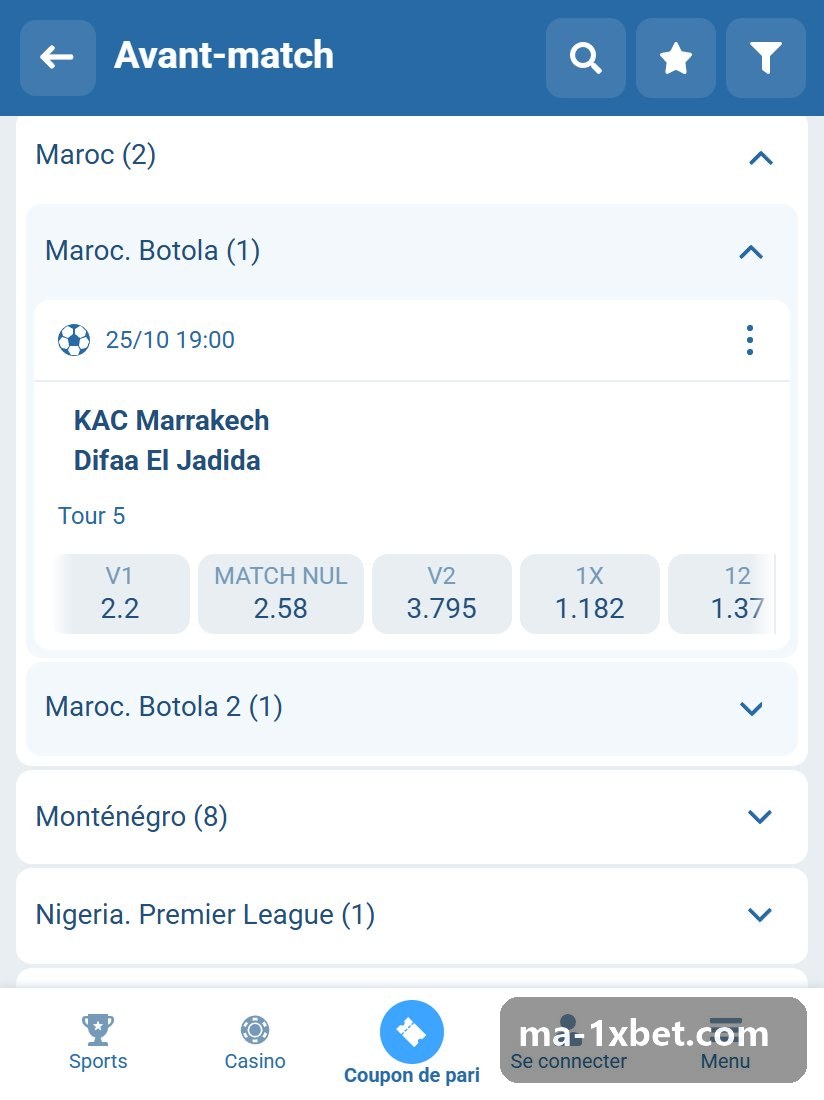
Fixtures rarely sit at one fixed hour. Where the format includes return meetings, a tie takes up two calendar rows, and the second reads through the first: the opening score shapes how both sides approach the return. Kick-offs are spread across the week so broadcasts do not collide, and two teams in one round can play a day apart. The pace is not shared equally: some participants run through a dense stretch of dates while others sit idle and watch the table move without them. Read the time printed on the fixture card in Moroccan hours, not the one quoted by a foreign channel.
The line does not appear all at once either. Combined markets and side options come last, once the base offer has settled, and it is often the day before that a meeting page reaches its full size. Early markets are thin; the full set arrives closer to kick-off, once squads and venues are confirmed. Returns and absences cluster around stoppages, and the field lining up on resumption rarely matches the one that contested the last round before the break. After a pause the first round back behaves oddly, and prices carry that uncertainty.
Markets on Australian Championship. Statistics play-off round and when each one fits
Every match has more to offer to bettors who know their options. The result market is where most coupons begin, and the rest of the list is built around it. Each base position answers a different question: who finishes ahead, by what margin, and how open the meeting stays until the end. Goal totals shift the question away from who wins and towards how open the game will be. The best-stocked fixtures are often the most contested, and an abundance of lines does not help you decide; it only multiplies the ways of expressing the same uncertainty. Corners, bookings, halves and individual performances only make sense once you hold an opinion about the shape of the match.
Market | What you predict | When it fits |
|---|---|---|
1X2 | Home win, draw or away win | A clear favourite, or a game you have read closely |
Double chance | Two of the three outcomes together | An outsider you trust to stay alive |
Over / Under goals | Whether the game passes a stated goals line | Two attacking sides, or a cautious pairing |
Both teams to score | Whether each side finds the net | Open games where neither defence convinces |
Handicap | The outcome after a virtual head start | A mismatch where the plain win price is too short |
Draw no bet | The winner, with the stake back on a level score | A tight Australian Championship. Statistics play-off round tie with no obvious favourite |
A reading built on the balance of power points toward the outcome or the handicap, while a reading built on rhythm and how open the play looks points toward totals. Choosing between them is mostly matching the market to the information you actually hold. If the assembled legs cannot be told as one coherent sentence, the ticket has no thesis; it gathers separate wishes that nothing obliges to come true together. A long chain of selections looks attractive because the return grows with every addition, yet each extra leg is another way for the coupon to die.
Inside the match: what moves the price
Odds stop being a forecast the second the whistle goes. The handicap is re-cut in steps around the current score: as soon as a gap opens, the line is redrawn from the live situation instead of the pre-match estimate. A goal, a dismissal or a long spell of pressure rewrites every line on the coupon within seconds. Long interruptions stretch the meeting beyond its expected length, so a position taken late can have more play ahead of it than the schedule suggested. Following the play itself beats reading the scoreboard: a team a goal ahead and camped in its own half is in more danger than the score admits. Goals don't always come off a striker's boot — a deflection, a mix-up at the back, an own goal, and the scoreboard moves when you least expect it, keeping the both-teams-to-score market alive right to the final minutes. Almost everything that unfolds is a variation on those patterns.
A trailing side eventually pushes bodies forward, the space left behind turns the closing stages into an end-to-end exchange, and counter-attack goals start falling at both ends. Goals arrive in clusters rather than on a tidy schedule, and a long stalemate can produce two inside five minutes. Each half carries its own goals line, set lower than the full-match one, so a locked-up start is played on the first-half total rather than on the ninety-minute line. The second half brings tired legs, wider gaps and coaches who have spent their first ideas. Moving the key man from one flank to the other reshuffles the duels without any substitution, since a different full-back now becomes the target and the attack shifts its axis on a single instruction. Those turning points are where live prices offer the most and forgive the least.
Discipline shapes a tight second half more than any tactical plan. A player already booked no longer defends the same way: the tackle comes later, some duels go unchallenged, and the coach often withdraws him at the break before a second card arrives. An early booking stops a defender tackling, and the flank behind him becomes an invitation. Having a genuine free-kick specialist changes the value of every foul conceded near the box; a routine block on the edge suddenly becomes a clear chance at goal. Dead-ball situations then settle a surprising share of matches, above all when open play has dried up.
The fourth official's board alone is enough to move the prices; the market reads the coach's intention before the substitute has even touched his first ball. Fresh attackers change the speed of a game at once, and a change made well before the hour signals an abandoned plan. Between phases of a meeting, scheduled interruptions close the markets too, and those pauses announce nothing about how the contest is going. Betting freezes while the referee deals with an incident, so a selection may return at a different number — re-read the coupon before confirming.
🔍 What to check before betting on Australian Championship. Statistics play-off round
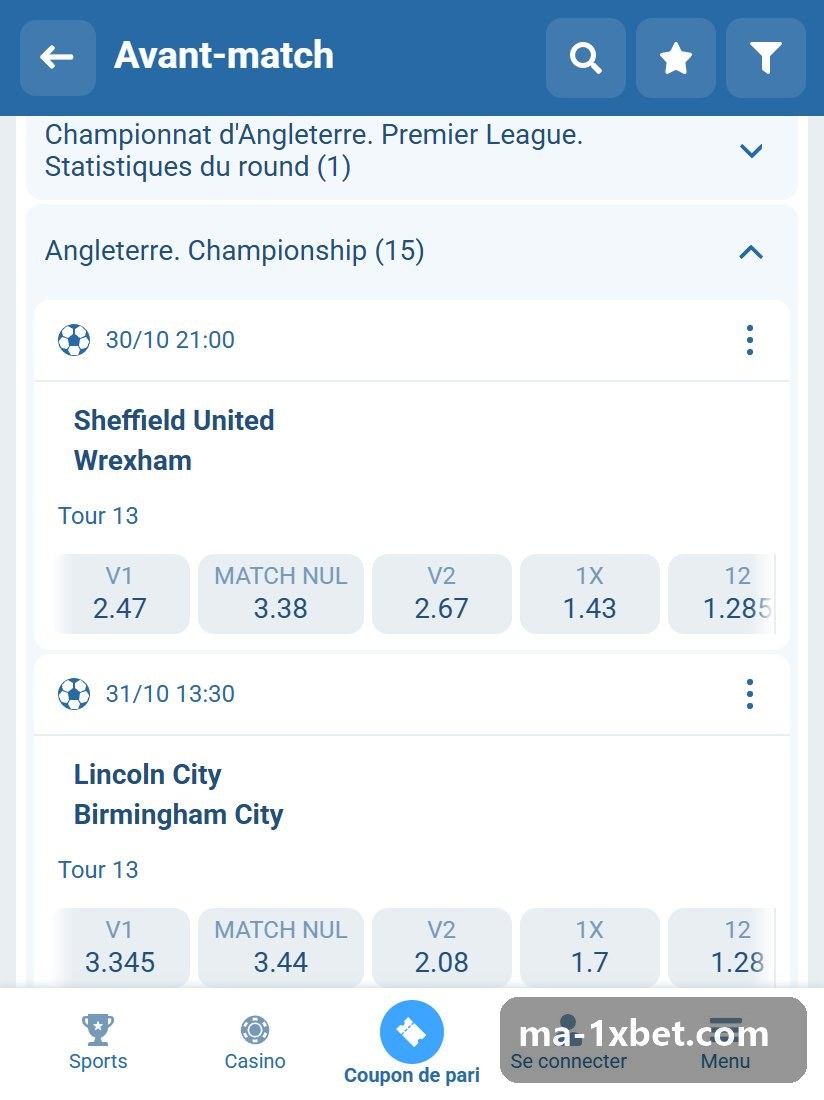

Preparation costs less than a lost coupon. A rematch never starts from zero: the side beaten the first time has had time to correct what cost it, and the earlier winner runs into an opponent unlike the one it dominated. A side with nothing to play for behaves differently from one that still needs points, and the team sheet shows it first. The immediate schedule matters as much as momentum does; between one competitor arriving off a midweek trip and another coming in rested, the freshness gap shows from the opening minutes. Recent results say more when you look at who they came against than when you simply count them. On neutral ground the advantage vanishes for both sides. Finals and stages gathered at a single venue put the two camps in identical conditions, which the usual reference points fail to anticipate. Pitch dimensions, surface quality and travel distance all leave traces in the numbers.
Late in the season the stakes redraw the roles: a side fighting to stay up attacks from the first minute at home, while a visitor already safe manages the trip without opening up. Home advantage is no constant: enormous for some clubs, nearly absent for others. A midweek round squeezed between two weekends turns training into pure recovery. With no tactical work in between, teams fall back on familiar patterns and the football served up gets more cautious. A team playing its third game in a single week rotates, defends deeper and concedes late. In early cup rounds and crowded weeks, the second team becomes simply the team. What a squad is really worth gets measured in those games rather than in the weekend headline fixtures. Depth separates the sides that survive a congested block from the ones that come apart in it.
A central defensive pair lives on automatic habits: the step forward for offside, the covering run, the moment one of them steps out to duel. An unfamiliar partner throws that timing off. A goalkeeper in form holds scorelines that every other number says should have collapsed. In severe heat the referee can grant cooling breaks, cutting the match into shorter segments where every stop doubles as a mini team talk for coaches to adjust the plan. Heat, wind and a heavy pitch pull totals down and make long passing far less reliable. Separate shots attempted from shots on target, because a flurry of efforts from distance inflates the count while leaving the goalkeeper completely untroubled. Numbers help most when you already know which question you asked them.
A scoring run looks impressive mainly when you ignore who stood opposite. More often than not it describes the order of opponents faced rather than any real jump in level. Averages hide the matches that produced them, and a scoring record built against weak opposition says little about facing an organised defence. The final score dresses up the content: three narrow wins can hide a game in decline, one defeat can sit on top of the best performance of the month, and the next price is built on the number rather than the manner. Treating a famous badge as a guarantee is expensive: the name on a shirt does not defend corners.
How to place a bet on Australian Championship. Statistics play-off round
The line opens several days before the event. The route from the main betting section to a confirmed coupon is short once you know where each step lives. Ordering the list by start time pushes the nearest meetings to the top, while everything scheduled for later slides down and stops crowding the screen. The order stays the same on desktop and phone.
Sign in to the account you opened in Moroccan dirham, so stakes and returns show in MAD.
Open football, pick Australian Championship. Statistics play-off round from the list of competitions and select the fixture you want.
Tap the odds beside your selection to send it to the coupon. The slip lists each selection with its market and price, so the whole bet can be read through one last time before it is sent. Single, accumulator and system sit on separate tabs of the same slip.
Enter the stake in MAD and check the return the slip calculates.
Confirm and wait for the acceptance message. In the label, '1' points to the side listed first and '2' to the other, nothing more; at a neutral-venue tournament that order names neither the favourite nor the host. The bet then appears in your history right away.
Prematch and live: two different approaches
Live odds react to what happens in play within seconds, sometimes before the score on your page has changed, a gap that pre-match betting simply does not have. Before kick-off you trade information for time: the market is calm and nothing forces a rushed decision. Long travel, a crowded calendar, home advantage, a return after a long break: all of it reads calmly beforehand, and none of it can be sorted out once play begins. Value there comes from work done in advance rather than from reaction speed.
Before the game the work rests on tables and past meetings, while live it is the counters ticking in real time that steer the stake. In play the balance flips and the clock becomes the binding constraint, which suits anyone following the match as it unfolds. Half markets shorten the horizon: a first-half total settles at the break, and forty-five minutes are easier to read than ninety. Following live football odds alongside the play shows a price and its reason at the same moment.
💳 Money, app and support in Morocco
When the money does not show up on the balance, the operation number stored in the history is enough to have it traced without retelling the whole story. Deposits here run through familiar Moroccan banking and cash channels, and the balance is credited in dirham with no conversion step. Each payment instrument applies its own minimum for withdrawals, and a balance under that bar has to grow before it can leave. Payouts return through the channel that funded the account, which keeps the checks short.
Method | Type of channel | What it suits |
|---|---|---|
CIH | Bank | Account transfers held directly in dirham |
Attijari | Bank | A dense branch network and a widely used banking app |
Al Barid | Postal bank | Accounts common well outside the largest cities |
Lbankalik | Mobile account | Opening and topping up straight from the phone |
Cash Plus | Cash agency | Paying at a counter without holding a bank account |
The app speaks first, signalling when a line opens or a fixture is about to begin, while the site waits to be opened before it shows anything at all. The phone build keeps the same coupon and market list as the desktop site, so a bet begun on one screen continues on the other. A few taps are enough to add the app to your phone. Installation files for Android and iOS sit on the mobile app page.
A calm, factual message moves faster than a heated one, because the agent works from concrete elements rather than from the tone of what was written. A stuck deposit or an unexpected settlement goes to the support chat, which answers in Arabic, French and English. Questions are usually handled without a long wait: the advisers reply promptly and follow the case until it is fully resolved. Having the transaction reference and the bet number in hand shortens the exchange considerably.
Derbies, standings and what comes next
Possession misleads in this fixture: long balls, scraps for second balls and play stopped every couple of minutes mean the side holding the ball is not the side creating. A local derby inside Australian Championship. Statistics play-off round bends form guides, and travelling support turns an ordinary mid-table fixture into a different sport. While a round is being played, the page lines up the running scores next to the fixtures still to come, and the whole day reads in a single glance. The competition page carries finished scores beside the rounds still to come, so nothing has to be searched for twice.
The slip shows the possible return before anything is confirmed, which spares the calculator on a three-leg accumulator. A season is judged over many rounds, and the habits built during the quiet weeks decide what the busy ones are worth. Experience the event from the heart of the action. From the 1xbet Morocco home page the football calendar stays two taps away on any device.