

Rubin Kazan - Rodina Moscow - live odds and in-play markets
What Rubin Kazan - Rodina Moscow is and where it runs
On a phone the score, the board and your open selections stay in view while play carries on. This page follows Rubin Kazan - Rodina Moscow from the first whistle to the last, and the board refreshes on its own while the ball is in play. The fixture belongs to Russian Cup, so the stage of that competition applies to this game too.
Preparation is built around this appointment, from training loads and rest windows to which secondary events to skip, and the rest of the year is arranged to fit around it. The level of a competition decides how deep the in-play list runs. Format length changes what can be concluded from it: a tournament finished inside a weekend leaves plenty of room for accidents, a league spread over months puts everyone back where they belong. A meeting of Rubin Kazan and Rodina Moscow in a lower division opens fewer markets than a top-flight fixture, and the board shows only what is genuinely trading at that minute.
Head-to-head history sits beside the live board for a reason. Earlier results between these two rarely mislead, and a short look at their past can refine the decision you are about to take. Earlier meetings of Rubin Kazan and Rodina Moscow describe habits rather than outcomes, while the standings and the rest of the calendar stay on Russian Cup for anyone checking what this result changes.
Reading the board while the game runs
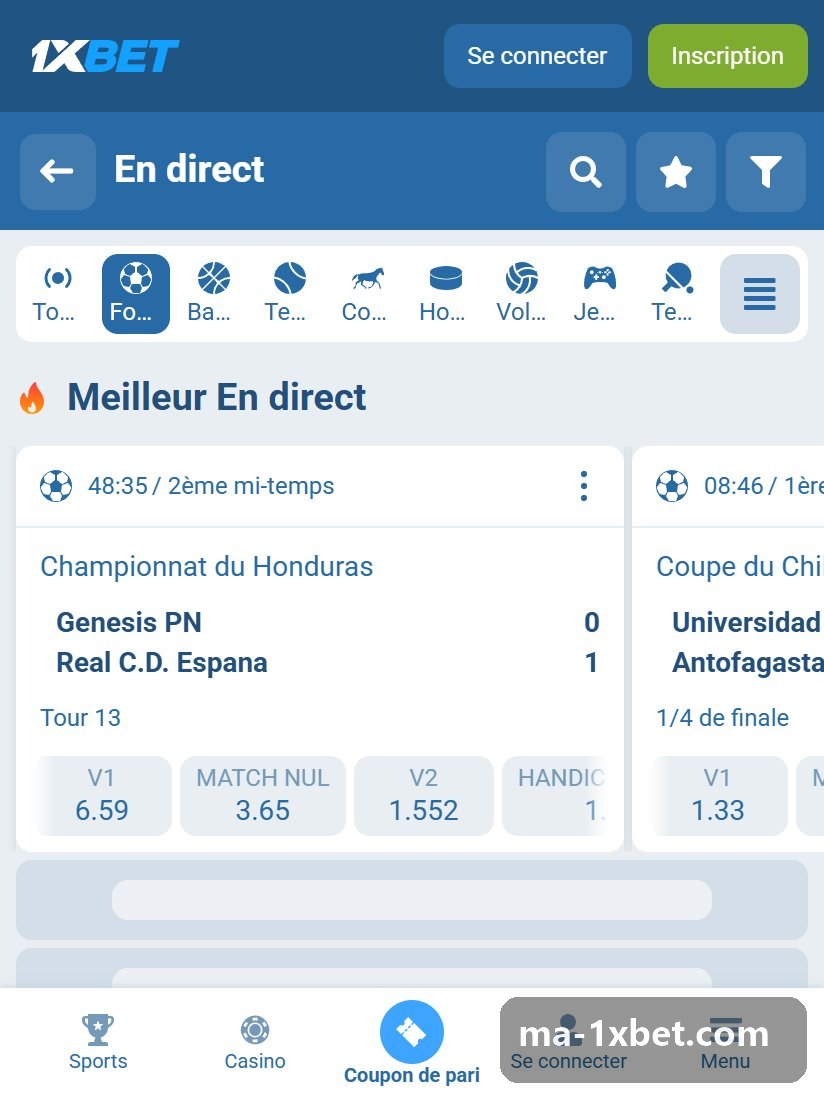

Under the scoreline sit the minute, the pressure counters and the price column. One tactical adjustment during the meeting, a change of approach or a reshaped plan is enough to move the line, often before the effect shows on screen. A goal, a dismissal or a penalty award rewrites that column at once, so the number seen a second earlier is not the number the coupon accepts.
Watch who sets the tempo. The side that decides when the meeting speeds up and when it slows holds an edge that rarely reaches the figures column. Reading a football match means watching where the ball spends its minutes, not only what the scoreline says. Moving the key man from one flank to the other reshuffles the duels without any substitution, since a different full-back now becomes the target and the attack shifts its axis on a single instruction. Such turns arrive without warning, and the market answers before the crowd does.
Rushing at the first price after a reopening rarely helps: it keeps moving while the situation finishes clarifying and the book absorbs what just happened. At the interval the list shrinks to the markets that survive a break and reopens when play restarts; a long stoppage for treatment or a video review does the same.
Live markets on this fixture
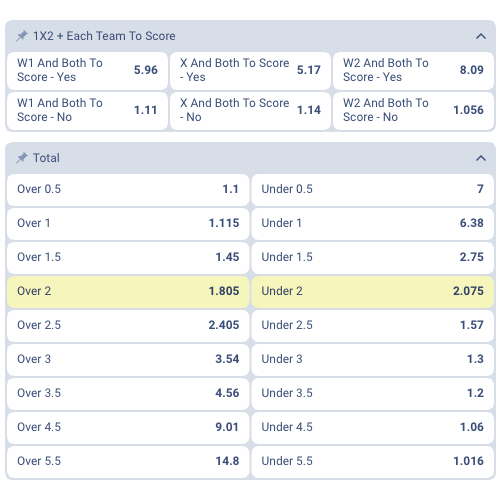
In running play the totals line is recalculated on what remains to be played. The in-play list for football is built in layers: the result, then goals, then the small events that repeat dozens of times in a game. The main handicap or total figure is the middle rung of a ladder, with alternative lines stacked above and below at prices that track the distance. Those base lines stay open almost from kick-off to the final whistle.
Every extra line is also a building block for a combined bet: a well-stocked sheet multiplies the assemblies possible across one round, provided each leg of the build is understood on its own. Depth follows coverage, so a widely tracked fixture opens corner and card lines that a quieter one never shows. All the popular options are here, from the outcome of the meeting to handicaps and over/under totals. Depending on the sport there are also exact score and period markets plus player or team specials, all ready for an accumulator. The table below shows what each family settles on.
Market | What the bet covers | How it behaves in play |
|---|---|---|
1X2 live | A win for Rubin Kazan, a draw, or a win for Rodina Moscow from the current score | Reprices after every goal and every red card |
Total goals | Goals from both sides together, over or under the posted line | The line drops as the minutes run out |
Asian handicap | One side starts the coupon with a goal advantage | Moves as soon as the game turns one-sided |
Both teams to score | Whether Rubin Kazan and Rodina Moscow both find the net | Closes once the answer can no longer change |
Next goal | Which side scores next, or nobody does | Settles at the next goal or at the whistle |
Corners and cards | The count of corners or cards in a half or across the game | Runs while play continues, pauses at the break |
Correct score | The exact scoreline at the end of the match | Swings hardest in the seconds after a goal |
The context of the day steers the choice more than the sheet does: fixture congestion, the wear of travel, and how much the meeting genuinely matters to each participant. A market taken because it matches what is happening on the pitch lasts longer than one taken out of habit, and the lines above are read against the clock.
What moves the price right now
One heated tackle and the referee already reaches for his cards; in a tense match the bookings pile up faster than anyone expects, which is exactly why the total cards market gets interesting long before the first goal. Each of those turns reaches the coupon within seconds. The second goal changes what the match is, since a two-goal lead turns the leader into a manager of the game, and comebacks from that far back stay rare. One goal shifts the totals line, the handicap and the result price in the same refresh.
A red shown near the end changes little on the scoreboard, since there is not enough football left to turn the advantage into goals, whatever the prices do. A red card leaves a side a player short for the rest of the game, and the market treats the remaining minutes as a different match. A favourite held level at the break has lost nothing yet, and the pattern of a half-time draw followed by a late pull-away recurs often enough to carry its own half-time/full-time price. The two halves seldom carry the same rhythm, and the second is where the goal lines usually get decided.
The target zone shapes the whole set piece: a driven ball to the near post hunts a flick-on, while a floated trajectory to the far post looks for the tallest man's leap. Corners and free kicks near the area are the shortest route to a goal when a side cannot build through the middle. An injury forces an unplanned change and burns one of the options: the plan for the closing stage collapses, and the coach finishes with the players he has, not the ones he wanted. Fresh legs after the hour change the pressing distance, and the goal markets answer within a few minutes.
Match statistics: what they show and what they hide
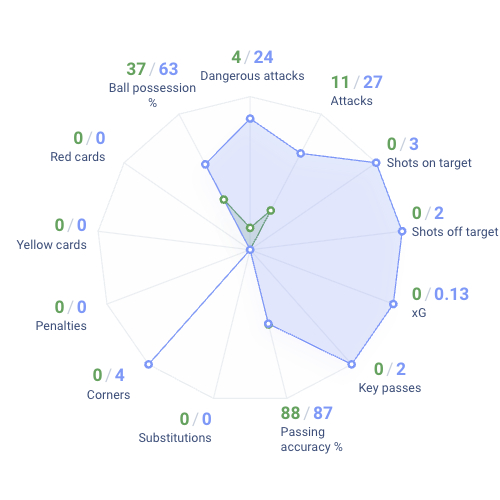
Five matches do not make a trend, especially when the opposition has changed along the way: a run built against the bottom of the table deflates against the first serious side. Possession, shots, shots on target, corners and dangerous attacks describe pressure, and pressure is what the goal markets price. Adding up the goals of a competition mixes phases with nothing in common: group games, where sides take risks, and knockout ties, where they protect what they have. The overall figure describes neither. A side can hold the ball for an hour without troubling the keeper, and the counter still reads in its favour.
A reserve keeper often arrives after months without a competitive minute. Match rhythm cannot be rehearsed in training, and his first hot intervention is also his first real action in a long while. One goalkeeper in form wipes out the gap the shot count promised. An early-season ranking compares unequal journeys; until everyone has faced a similar spread of opponents, the positions flatter some and bury others. Recent form of Rubin Kazan and Rodina Moscow explains the opening prices, then loses weight with every minute the fixture actually plays.
Placing a bet while the game is live
The line opens several days before the event. The route is identical on a computer and on a phone.
When the same pair turns up twice in the calendar, the date and time printed beside the names are the only reliable way to tell one meeting from the other. The football list in live football holds the fixture in place from kick-off to the final whistle.
Tap the price of the market you want. A live selection can join a slip already holding pre-match lines; its price simply keeps moving until the moment you validate. The coupon stores that figure as it stood at the tap.
Enter the stake in dirhams and check the return the coupon calculates.
Every accepted slip gets its own number and lands in the bet history, and a glance at that list confirms the stake really went through, especially after a patchy connection. A price that moved while you were typing comes back for acceptance instead of being swapped in silently.
Follow the ticket in the list of open bets, where settlement appears once the result is official.
Where the option is offered, a running bet can be closed early for the sum shown at that moment, a judgement about the minutes still to come rather than the final score.
Prematch and live on the same fixture
Everything is open days ahead, side markets included, then the choice narrows during the meeting to whatever is still undecided, and it keeps shrinking as things settle. The prematch line opens days ahead on the football line and closes the moment the referee starts play. Long-term markets such as the championship winner are taken early, since their prices carry the most before the hierarchy settles into place. A price taken early carries the risk of team news; one taken in play carries the risk of the next attack.
There is no obligation to bet before the event starts. A position opened before kick-off and an addition made twenty minutes in can sit in the same ticket list. A favourite that falls behind gets its handicap re-cut at a price the pre-match board never showed, and that scenario is caught live rather than booked in advance. The board stays open to the last action, and the rest of the live section works on the same clock for every other sport in play.
Money, app and help in Morocco
Nothing ties the account to a single deposit option: the one picked in the cashier this time need not be the one used next time, and no extra procedure is involved. An account held in Morocco is funded and settled in dirhams, so no conversion stands between the deposit and the stake. Withdrawing happens in the account area, not on the championship page: the page shows fixtures and prices, while the account handles the money. A withdrawal is requested from the same cashier screen, which lists the methods open for it at that moment.
Method | What it is | Currency | Suits a bettor who |
|---|---|---|---|
CIH | Moroccan bank, cards and transfers | MAD | already banks there and pays from the banking app |
Attijari | Moroccan banking network with branches nationwide | MAD | holds a card from the same group |
Al Barid | Postal banking service | MAD | uses the post office network every day |
Lbankalik | Everyday Moroccan banking service | MAD | handles the account mostly from a phone |
Cash Plus | Cash payment network with staffed counters | MAD | pays in notes at a counter, without a card |
A default stake set once in the settings turns placing a bet into a single tap, which matters when a live price only holds for a few seconds. A phone left on the fixture screen shows the same prices as a computer, and the mobile app page sets out what the download asks for. A single download puts the entire platform on your screen. A goal alert lands faster than a manual refresh, which decides whether a market is still open when you reach it.
Sending the same question through two channels opens two parallel files that get in each other's way; one thread, nudged when needed, moves in a straighter line. A stake that did not go through is easiest to raise from inside the account, where the ticket carries its own number. On big-match evenings, sending the coupon number together with a screenshot cuts the back-and-forth with the adviser right down. The reply arrives in the same window, and the thread keeps the history.
After the final whistle
Sorting by date puts the calendar back in order, and a single look shows which meetings come first and which ones will wait until the end of the week. Settlement runs against the official result, and the ticket moves from the open list into the history. Prices keep moving, so any written description trails behind them, while the section itself shows where things stand at this moment. The competition carries on, and the next round for Rubin Kazan and Rodina Moscow appears on the same list within hours.
Bets on running events are placed from the live section. A game still in play keeps its board alive to the last kick, and the list rolls on to the next kick-off as soon as this one closes.