

Mexico - Peru - live odds and in-play markets
What Mexico - Peru is and where it runs
On a phone the score, the board and your open selections stay in view while play carries on. This page follows Mexico - Peru from the first whistle to the last, and the board refreshes on its own while the ball is in play. The fixture belongs to Friendlies. National Teams, so the stage of that competition applies to this game too.
Preparation is built around this appointment — training loads, rest windows, which secondary events to skip — and the rest of the year is arranged to fit around it. The level of a competition decides how deep the in-play list runs. Money on the table sorts competitions as reliably as any honours list; a serious purse brings in entrants who would otherwise have filled that week somewhere else. A meeting of Mexico and Peru in a lower division opens fewer markets than a top-flight fixture, and the board shows only what is genuinely trading at that minute.
Head-to-head history sits beside the live board for a reason. The minutes in which goals have landed across this series matter to half-time markets as much as to the final result. Earlier meetings of Mexico and Peru describe habits rather than outcomes, while the standings and the rest of the calendar stay on Friendlies. National Teams for anyone checking what this result changes.
Reading the board while the game runs


Under the scoreline sit the minute, the pressure counters and the price column. Sustained pressure without reward still counts: when one side strings together favourable sequences, the price drifts steadily long before the situation actually turns. A goal, a dismissal or a penalty award rewrites that column at once, so the number seen a second earlier is not the number the coupon accepts.
The scoreline governs appetite for risk — an early opener loosens the whole meeting, while a deadlock that survives into the closing stages pushes both camps to lock everything down. Reading a football match means watching where the ball spends its minutes, not only what the scoreline says. Withdrawing the star striker with the score level says plenty about the staff's priorities, as the fixture slips down the list and the closing stages read differently from that change on. Such turns arrive without warning, and the market answers before the crowd does.
Rushing at the first price after a reopening rarely helps: it keeps moving while the situation finishes clarifying and the book absorbs what just happened. At the interval the list shrinks to the markets that survive a break and reopens when play restarts; a long stoppage for treatment or a video review does the same.
Live markets on this fixture
Good value often hides in the markets beyond the main result. The in-play list for football is built in layers: the result, then goals, then the small events that repeat dozens of times in a game. Base positions settle on the official result as soon as the meeting ends, and the balance is back in play for the next fixture of the day. Those base lines stay open almost from kick-off to the final whistle.
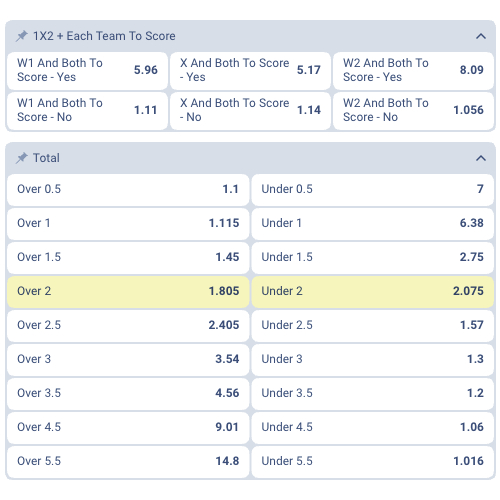
The same market name does not guarantee the same rule from one sport to another: a total or a handicap is not settled the same way everywhere, and the line's own terms are what counts. Depth follows coverage, so a widely tracked fixture opens corner and card lines that a quieter one never shows. Each team carries its own totals too — its individual goal count, winning at least one of the two halves, or scoring in both. These markets isolate one camp's output without depending on what the opponent produces. The table below shows what each family settles on.
Market | What the bet covers | How it behaves in play |
|---|---|---|
1X2 live | A win for Mexico, a draw, or a win for Peru from the current score | Reprices after every goal and every red card |
Total goals | Goals from both sides together, over or under the posted line | The line drops as the minutes run out |
Asian handicap | One side starts the coupon with a goal advantage | Moves as soon as the game turns one-sided |
Both teams to score | Whether Mexico and Peru both find the net | Closes once the answer can no longer change |
Next goal | Which side scores next, or nobody does | Settles at the next goal or at the whistle |
Corners and cards | The count of corners or cards in a half or across the game | Runs while play continues, pauses at the break |
Correct score | The exact scoreline at the end of the match | Swings hardest in the seconds after a goal |
When the whole idea rests on how the meeting will start, waiting for the live phase to confirm that start beats locking the position before a ball is played. A market taken because it matches what is happening on the pitch lasts longer than one taken out of habit, and the lines above are read against the clock.
What moves the price right now
A key man pulls up, limps off, and the balance of the entire match tilts with him; that one change is often enough on its own to move both the handicap and the final-result odds. Each of those turns reaches the coupon within seconds. During a video review the live markets freeze for the length of the check, then reopen at prices adjusted to whatever was decided. One goal shifts the totals line, the handicap and the result price in the same refresh.
Accumulated bookings are paid for before kick-off: a regular is suspended, and the coach has to patch a whole area of the pitch with someone who never plays there. A red card leaves a side a player short for the rest of the game, and the market treats the remaining minutes as a different match. At the interval a separate set of second-half lines opens and starts again from nil-nil, where the first act's score no longer counts and only what remains to be played is priced. The two halves seldom carry the same rhythm, and the second is where the goal lines usually get decided.
From a corner, height counts for more than technique: big defenders arriving in front of goal are worth more than an elegant midfielder who loses every aerial duel. Corners and free kicks near the area are the shortest route to a goal when a side cannot build through the middle. Taking off a booked player before he collects a second card is a defensive decision in disguise; the coach would rather lose a starter than finish the match with ten. Fresh legs after the hour change the pressing distance, and the goal markets answer within a few minutes.
Match statistics: what they show and what they hide
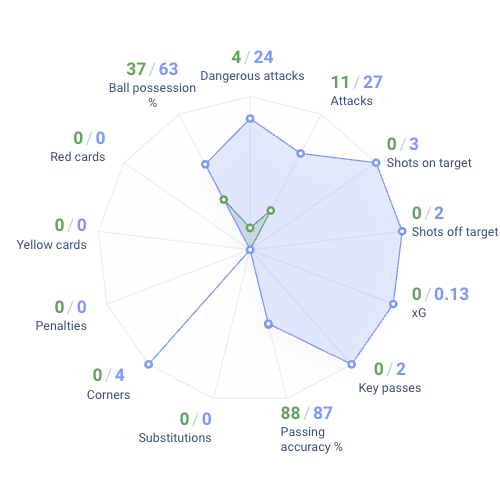
A goals-per-game figure only compares inside its own league: tempo, refereeing and the distance between top and bottom differ from one competition to the next. Possession, shots, shots on target, corners and dangerous attacks describe pressure, and pressure is what the goal markets price. A form table lines up results produced by different teams: the weekend side, the midweek side, the one that played with reserves. The points add up, the contexts do not. A side can hold the ball for an hour without troubling the keeper, and the counter still reads in its favour.
How fast the ball leaves the keeper's hands after a save separates two profiles: one launches a counter within a second of the stop, the other holds on and lets the opposing block settle back into place. One goalkeeper in form wipes out the gap the shot count promised. An early-season table compares unequal journeys; until everyone has faced a similar spread of opponents, the standings flatter some and bury others. Recent form of Mexico and Peru explains the opening prices, then loses weight with every minute the fixture actually plays.
Placing a bet while the game is live
System mode spreads the same picks across several combinations. The route is identical on a computer and on a phone.
Reading the label to its last word matters, since women's, under-21 and reserve tournaments carry almost the same name as the main event and sit right next to it. The football list in live football holds the fixture in place from kick-off to the final whistle.
Tap the price of the market you want. Tabs at the top of the slip move the same selections from one bet type to another, sparing you the job of rebuilding the list line by line. The coupon stores that figure as it stood at the tap.
Enter the stake in dirhams and check the return the coupon calculates.
A meeting that gets under way while you are still filling the slip takes its pre-match line with it, so the pick has to be made again from the live section. A price that moved while you were typing comes back for acceptance instead of being swapped in silently.
Follow the ticket in the list of open bets, where settlement appears once the result is official.
Where the option is offered, a running bet can be closed early for the sum shown at that moment, a judgement about the minutes still to come rather than the final score.
Prematch and live on the same fixture
The mid-match break is a compromise between the two worlds: the board fills out again, prices settle, and the decision leans on a full period actually watched. The prematch line opens days ahead on the football line and closes the moment the referee starts play. A price taken before the start is locked at validation, and whatever the market does afterwards no longer touches your slip. A price taken early carries the risk of team news; one taken in play carries the risk of the next attack.
Pre-match prices are built from form, statistics and announced line-ups, while live prices are recalculated from what the players are actually doing. A position opened before kick-off and an addition made twenty minutes in can sit in the same ticket list. Bet on football as it unfolds, with in-play odds shifting after every goal, red card or clear chance. The board stays open to the last action, and the rest of the live section works on the same clock for every other sport in play.
Money, app and help in Morocco
Al Barid Bank rides on the country's postal network, which keeps deposits within reach even in towns where classic bank branches are thin on the ground. An account held in Morocco is funded and settled in dirhams, so no conversion stands between the deposit and the stake. Nothing ties a payout to the tournament calendar; the request can be filed while the fixtures are still running or once the last of them is done. A withdrawal is requested from the same cashier screen, which lists the methods open for it at that moment.
Method | What it is | Currency | Suits a bettor who |
|---|---|---|---|
CIH | Moroccan bank, cards and transfers | MAD | already banks there and pays from the banking app |
Attijari | Moroccan banking network with branches nationwide | MAD | holds a card from the same group |
Al Barid | Postal banking service | MAD | uses the post office network every day |
Lbankalik | Everyday Moroccan banking service | MAD | handles the account mostly from a phone |
Cash Plus | Cash payment network with staffed counters | MAD | pays in notes at a counter, without a card |
Signing in comes down to a fingerprint or a short code, instead of typing a full password again every single time you come back to the account. A phone left on the fixture screen shows the same prices as a computer, and the mobile app page sets out what the download asks for. Add a championship to favourites and its fixtures open first every time. A goal alert lands faster than a manual refresh, which decides whether a market is still open when you reach it.
Evenings with a big fixture on concentrate the requests, and a question that can be asked in the morning comes back noticeably faster. A stake that did not go through is easiest to raise from inside the account, where the ticket carries its own number. When a fixture is interrupted or postponed, the adviser explains what happens to the stake and how the accumulator is recalculated without that selection. The reply arrives in the same window, and the thread keeps the history.
After the final whistle
The outright winner market runs all season long, and the way its prices drift tells its own version of the standings, contender by contender. Settlement runs against the official result, and the ticket moves from the open list into the history. Selections already taken stay in the slip while browsing continues, so an accumulator builds itself up fixture by fixture. The competition carries on, and the next round for Mexico and Peru appears on the same list within hours.
Don't watch from the sidelines. A game still in play keeps its board alive to the last kick, and the list rolls on to the next kick-off as soon as this one closes.